
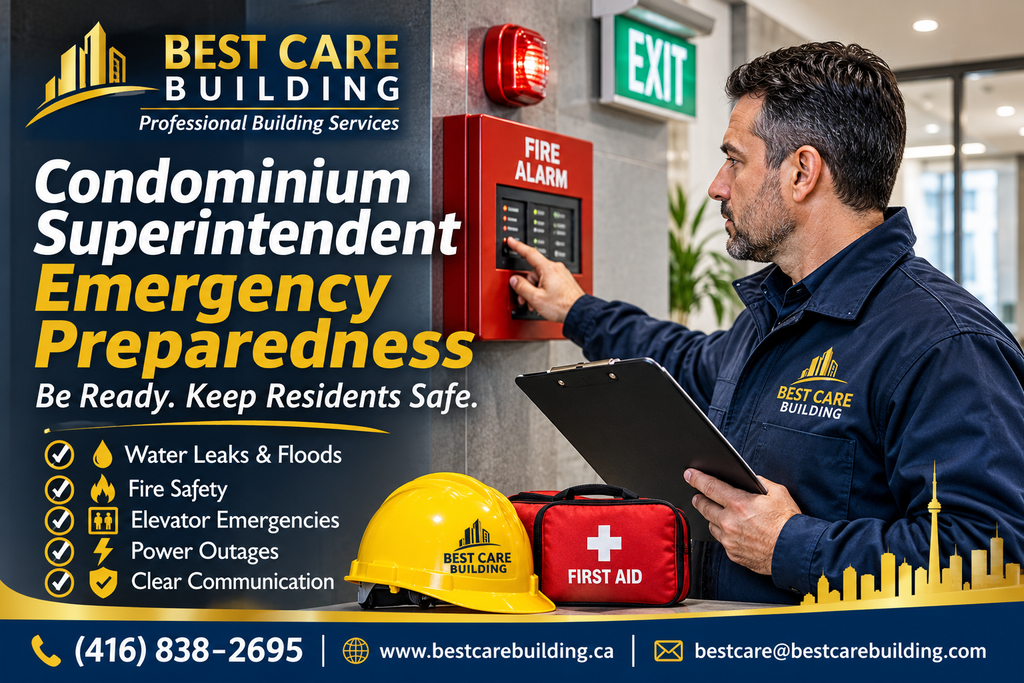
When it comes to condominium superintendent emergency preparedness, having a qualified professional on site is critical for protecting residents, maintaining building safety, and responding swiftly to unexpected situations. From water leaks and flooding to fire alarms, power outages, elevator breakdowns, and security incidents, emergencies can happen at any time.
A condominium superintendent plays an important role in protecting residents, maintaining building safety, and responding to unexpected situations. From water leaks and flooding to fire alarms, power outages, elevator breakdowns, and security incidents, emergencies can happen at any time.
But how can a condominium board or property manager know if their superintendent is truly prepared to handle an emergency?
Having a superintendent on site is not enough. The right professional must have the knowledge, training, communication skills, and ability to take immediate action when something goes wrong.
7 Key Signs of Condominium Superintendent Emergency Preparedness
1. They Know What to Do During a Water Leak or Flood
Water leaks are among the most common emergencies in condominium buildings. A burst pipe, overflowing toilet, leaking ceiling, or mechanical failure can quickly cause serious property damage.
An experienced condominium superintendent should know how to:
- Locate and shut off the appropriate water supply when safe and authorized.
- Identify the source of the leak.
- Contact emergency plumbing contractors.
- Notify property management immediately.
- Protect affected common areas and document the damage.
- Help coordinate access to affected units.
A superintendent who reacts quickly can help reduce property damage and prevent a small problem from becoming a major restoration project.
2. They Understand Fire Safety and Emergency Procedures
Fire emergencies require immediate attention. A qualified superintendent should understand the building’s fire safety plan, emergency procedures, and responsibilities.
They should know how to:
- Respond appropriately when a fire alarm activates.
- Contact 911 when necessary.
- Follow the building’s emergency procedures.
- Communicate with property management and emergency responders.
- Never interfere with fire department operations.
- Report damaged or malfunctioning fire safety equipment.
A superintendent should also know the location of fire safety equipment, emergency exits, and designated building access points.
3. They Can Respond to Elevator Emergencies
Elevator entrapments can be frightening for residents and visitors.
A professional condominium superintendent should know how to respond when someone becomes trapped inside an elevator.
This includes:
- Contacting the elevator emergency service provider.
- Calling 911 when there is an immediate medical or safety emergency.
- Communicating calmly with trapped passengers when possible.
- Keeping residents away from unsafe equipment.
- Following the elevator contractor’s instructions.
- Never attempting an unauthorized rescue or opening elevator doors.
Knowing what not to do is just as important as knowing what to do.
4. They Know How to Handle Power Outages
A power outage can affect elevators, access control systems, garage doors, lighting, and other essential building equipment.
An experienced superintendent should understand the building’s emergency procedures and know how to:
- Check whether the outage affects the entire building or a specific area.
- Contact the appropriate utility provider and contractors.
- Check emergency lighting from a safe location.
- Communicate updates to property management.
- Follow generator and backup power procedures where applicable.
- Report equipment failures and safety concerns.
They should never attempt electrical repairs beyond their qualifications.
5. They Communicate Effectively Under Pressure
Technical knowledge is important, but communication is equally essential.
During an emergency, residents want clear information. Property managers need accurate updates, and contractors need proper coordination.
A good superintendent remains calm, avoids unnecessary confusion, and communicates important information promptly.
They should also document incidents, including the time, location, actions taken, contractors contacted, and any outstanding issues.
6. They Understand Preventative Maintenance
The best condominium superintendents do not simply wait for emergencies to happen.
They actively look for potential problems before they become serious.
Examples include:
- Inspecting mechanical rooms and common areas.
- Reporting unusual water leaks or moisture.
- Checking for damaged doors and locks.
- Monitoring unusual noises from building equipment.
- Reporting malfunctioning lighting and safety equipment.
- Identifying potential trip hazards.
- Following building inspection and maintenance schedules.
A proactive superintendent can help prevent costly repairs and reduce emergency situations.
7. They Have an Emergency Contact and Escalation Plan
Every condominium superintendent should understand who to contact when an emergency occurs.
They should have access to an updated emergency contact list that includes:
- Property management.
- Plumbing contractors.
- Electrical contractors.
- Elevator service providers.
- Fire alarm service providers.
- Security companies.
- Emergency restoration companies.
- Emergency services.
They should also understand which situations require immediate escalation and which require routine maintenance follow-up.
Questions Condominium Boards Should Ask When Hiring a Superintendent
When interviewing a potential condominium superintendent, do not focus only on previous employment experience. Ask practical questions that demonstrate their ability to respond to real emergencies.
Consider asking:
- What would you do if a major water leak occurred at 2:00 a.m.?
- How would you respond if a resident became trapped in an elevator?
- What steps would you take if the building fire alarm activated?
- How would you handle a power outage affecting the entire building?
- How do you communicate emergencies to property management?
- Can you explain how you document incidents and follow up on repairs?
- Have you participated in emergency response training?
Look for answers that demonstrate practical knowledge, sound judgment, calm communication, and an understanding of emergency procedures.
Why Condominium Superintendent Emergency Preparedness Matters
A condominium superintendent is much more than someone who maintains hallways and responds to maintenance requests.
They are an important part of a building’s daily operations and emergency response system.
Hiring the right superintendent can help protect residents, reduce property damage, improve communication, and support the property management team.
Condominium boards should prioritize candidates with relevant building experience, emergency preparedness knowledge, strong communication skills, and a proactive approach to maintenance.
Looking for Professional Condominium Superintendent Services in Toronto and the GTA?
At Best Care Building, we understand the importance of reliable condominium building operations, professional maintenance, and responsive superintendent services.
We help condominium properties maintain safe, clean, and well-managed environments through professional building staffing and cleaning services.
If your condominium corporation or property management company is looking for experienced condominium superintendent services in Toronto and the GTA, contact Best Care Building.
Website: https://www.bestcarebuilding.ca
Phone: (416) 838-2695
Email: bestcare@bestcarebuilding.com